
Featured Service: Construction Data & Surveying
Changing Stakes: The Growing Role of Construction Data & Survey Technology in Site Development
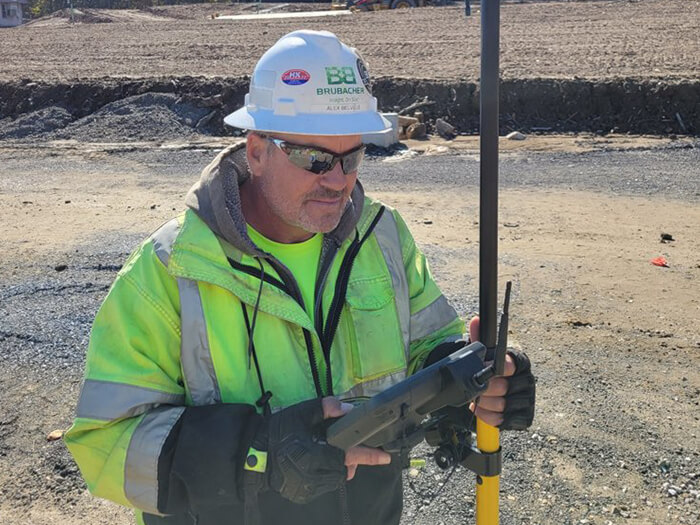
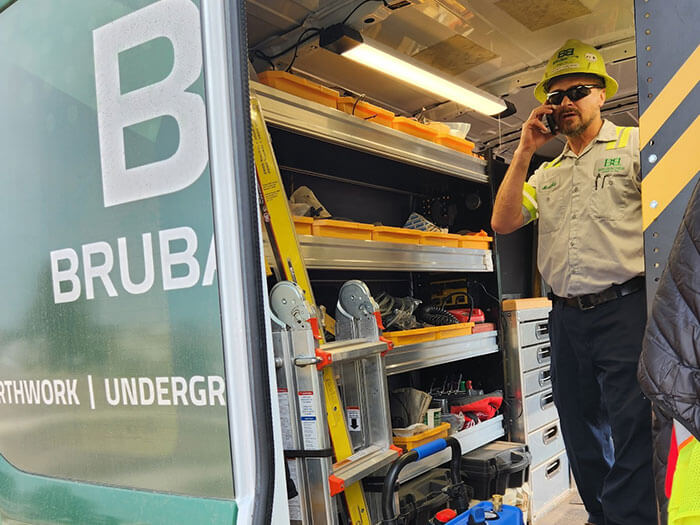
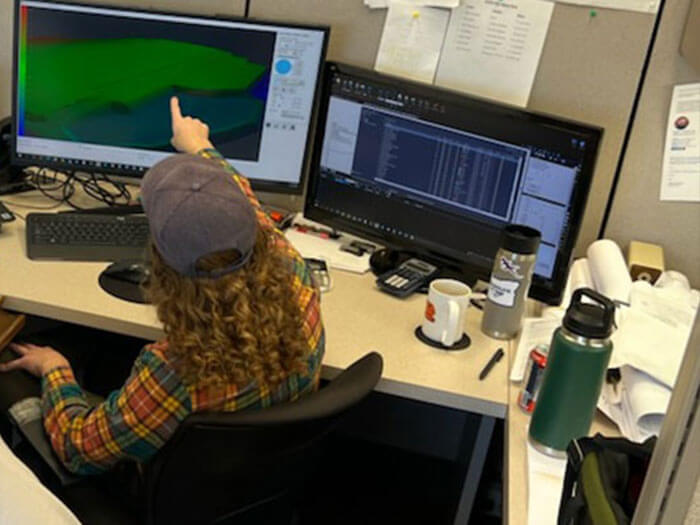
When many people think of construction surveying work, they picture a crew member standing beside a tripod along the edge of a jobsite, carefully checking measurements or physically placing stakes in the ground. While that image still reflects part of the work, the reality of modern survey operations has changed dramatically as construction data has become more readily available behind the scenes.
Across the sitework industry, advances in construction technology, including GPS surveying equipment, machine control systems, drone surveying and mapping, fleet telematics, digital modeling, and cloud-based communication, have transformed how projects are planned, coordinated, and built. At Brubacher, these technologies are not viewed as standalone tools or flashy innovations. Instead, they are part of a larger integrated approach focused on communication, collaboration, efficiency, and helping projects move forward more smoothly.
“Years ago, you had several very distinct operations,” explained President Keith Brubacher. “Survey crews were putting stakes in the ground, operators were relying on those stakes to perform the work (and they were often driven over!), and information was flowing through several separate channels. That information is now integrated directly into the equipment, shared digitally, and constantly flowing between teams throughout the entire lifecycle of a project.”
Today’s construction data and site surveying workflows begin long before dirt is moved on site by an excavation contractor. During estimating and preconstruction, digital files and models are reviewed, processed, and coordinated to help prepare grading information, machine control systems, GPS survey data, and site layouts. From there, information continues to flow among office teams, field crews, project managers, operators, and the equipment itself throughout the course of construction.
Building Better Coordination Through Integrated Information
One of the biggest changes within the industry has been the shift from manual processes to connected systems that provide teams with real-time access to project information.
“Back in the day, you might have had tolerances off by several inches,” shared Survey Department Manager Jon F. “Now, with GPS and machine control technology, we’re often working within extremely tight tolerances of much less than an inch while also moving much faster than we could ten—or even five—years ago.”
Rather than relying solely on physical stakes placed throughout a project, which can easily be damaged or misplaced, operators can now access grading information directly within equipment systems. Files can be updated digitally, adjustments can be communicated more quickly, and teams can respond to changing project conditions more efficiently. Jon noted, “that faster flow of information also allows field teams to adapt more quickly as project conditions shift or design changes throughout the course of construction.”
Meanwhile, fleet telematics and equipment monitoring systems provide another layer of behind-the-scenes communication. It reports operating vs. idling hours, location data, diagnostic information, and maintenance alerts in real time, helping teams support predictive maintenance, identify issues earlier, and reduce unexpected downtime.
“The machine talks to us and says, ‘I’m feeling sick, I need care.’” Keith explained with a smile. “It may not literally say that, but that’s essentially what’s happening. The equipment is communicating information about its condition and performance so we can respond proactively with maintenance or repair service instead of waiting for a larger issue to occur.”
Chief Technology Specialist Anatoliy Y. helps support many of these integrated systems across Brubacher’s operations. His role includes grade control support, troubleshooting, equipment data monitoring, fleet technology support, automation systems, and remote diagnostics.
In many cases, that remote support allows issues to be identified and addressed more quickly while also reducing unnecessary trips into the field or additional time spent around active equipment, thereby reducing risk. “Technology helps improve safety, efficiency, and accuracy,” Anatoliy shared. “At the same time, human experience and judgment are still extremely important. The best results come from combining skilled people with the right technology and communication.”
Solving Problems Earlier in the Process
For Brubacher, one of the greatest advantages of integrated construction data and survey capabilities is the ability to identify potential challenges earlier. As teams process grading models, utility information, drainage layouts, and site data, they are often able to identify opportunities for clarification, coordination, or adjustment before work progresses.
In some cases, teams have worked through grading and drainage adjustments to help ensure parking areas performed as intended while coordinating closely with paving operations. Other projects have required multiple site grading adjustments throughout different phases of construction to help maintain dirt balance, minimize blasting needs, and coordinate utility changes because existing utilities are not located where anticipated.
Brubacher teams have also developed simplified utility infrastructure coordination plans that combine electric, gas, and communications layouts into more intuitive field-friendly documents that help subcontractors install systems more efficiently.
This type of coordination is possible because information moves quickly and seamlessly between departments and teams. None of this work happens in isolation. Critically, the speed of communication and the ability to coordinate information between departments help the Brubacher team identify issues earlier, work collaboratively toward solutions, and keep projects moving forward.
The team emphasized that these workflows are not about replacing engineering teams or redesigning projects. Instead, they are about helping improve constructability, supporting coordination between stakeholders, and adapting efficiently as project conditions change.
A Team Effort Behind the Scenes
While many aspects of construction data and survey work happen out of view from work on the jobsite, the impact is felt across nearly every phase of a project. Drone surveying and mapping, drone topographic survey technology, GPS survey systems, machine control files, telematics reporting, grade verification, and digital modeling all help support the larger goal of delivering projects safely, efficiently, and accurately.
According to the team, technology is only part of the equation. Collaboration between departments that interpret and act on the data remains essential. “There’s a lot of teamwork involved,” Anatoliy shared. “We all help each other. Everyone brings different experience and knowledge to the table, and that communication helps projects succeed.”
That connected approach depends on consistent communication and collaboration between field crews, equipment teams, survey professionals, project managers, and operations staff working toward the same goal. It also reflects one of Brubacher’s core values—Teamwork—and reinforces the company’s commitment to keep projects moving forward through practical problem-solving, integrated support, and responsive communication.
As construction technology continues to change, Brubacher’s approach remains grounded in the same principles that have guided the company for decades: strong communication, practical problem-solving, teamwork, and a commitment to doing things the right way with a dedication to providing the kind of practical Insight. On Site.® that helps teams respond confidently to changing project conditions at every step.