
Featured Service: Paving
The Final Layer That Reflects Everything Beneath It
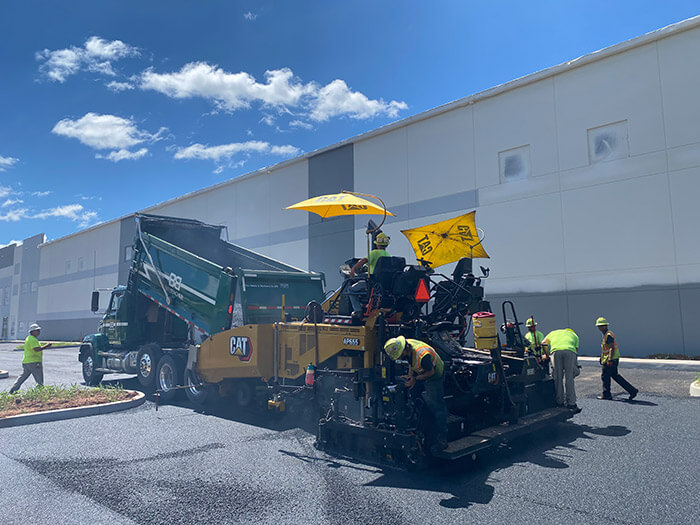
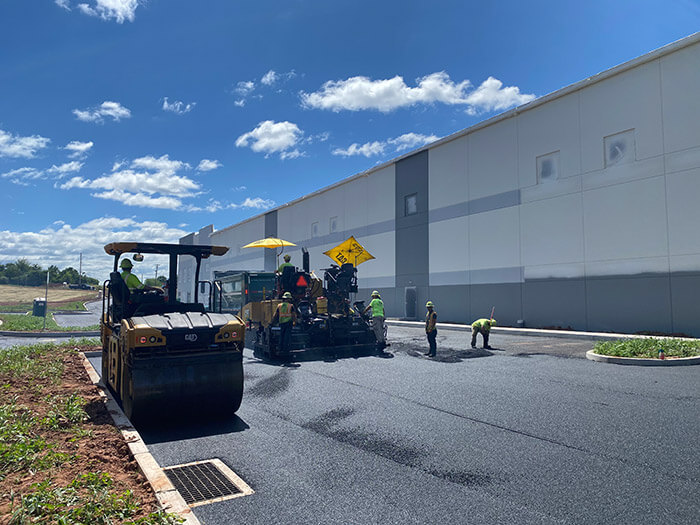
On a Brubacher paving project, thousands of details come together long before the first truck arrives to place asphalt. Earth is moved. Utilities are installed. Grades are set. Traffic control plans are coordinated. But when the work is complete, what most people see is the pavement.
“The paving department really places the rubber stamp on every Brubacher job,” said Director of Field Operations Brad C. “Asphalt is the final product. Dirt and pipe disappear from view at the end of a project, while the paving work is what everyone sees and drives on for years to come.”
In this way, at Brubacher, paving is more than the process of milling and placing asphalt. It is the visible expression of standards. For a company known across Pennsylvania, Maryland, and Delaware as a trusted earthwork, utilities, and paving contractor, that final layer carries weight—figuratively and literally. Whether it is commercial paving for a planned industrial campus, trench restoration after utility installation, or paving roadways within a new residential neighborhood, the finished surface reflects the preparation and professionalism behind it.
A Department That Has Grown and Evolved
Over the past several decades, Brubacher’s paving operations have grown steadily, and with a deliberate strategy behind that growth. Years ago, the focus centered largely on subdivisions and large commercial projects—primarily paving tied to Brubacher’s own site development work. However, as the company has expanded our utilities and site services, paving has naturally grown alongside it.
Trench restoration and municipal roadwork also diversified the portfolio. More recently, Brubacher began pursuing outside paving sales more intentionally—establishing the team not only as a support function but also as a full-service asphalt paving contractor serving clients across Southeast Pennsylvania and surrounding areas, and as part of Brubacher’s broader integrated service offering, including work under PA COSTARS.
“Our paving portfolio has diversified,” Brad explained. “We self-perform paving on our own jobs, and we promote that service to others.”
Technology has progressed as well. Today’s pavers use improved sonic controls to help set grade and depth, supporting greater precision and consistency. Those refinements may not always be visible to clients, but they directly impact surface quality and ride.
Integration Before Asphalt
As paving operations have evolved, so has their integration with Brubacher’s other service areas. Paving is no longer viewed as the final step that simply follows earthwork. Instead, the team is brought into planning conversations earlier—especially on projects involving significant asphalt paving needs.
“We don’t wait until it’s right before the pave date to get involved,” Brad said. “That early collaboration makes a difference.”
Kevin F., Paving Department Manager, shared that much of his focus since stepping into the role last fall has been refining internal workflows to support that integration.
“Successful paving doesn’t happen in isolation. Surface preparation, drainage, trucking coordination, and schedule communication all affect the final product. When expectations are clear and roles are well-defined, excellence becomes consistent,” Kevin explained.
That integration requires close coordination across project management, earthwork and utilities teams, trucking and logistics, and field supervisors. And, as Kevin noted, asphalt performance is heavily influenced by what happens before it is placed. Bringing the paving team into conversations earlier helps protect both quality and schedule.
Raising the Standard in the Field
Operational refinement has extended to crew structure and leadership development. In the past, paving supervisors often arrived on a jobsite and began placing material without having previously reviewed upcoming jobs. That reactive approach could create avoidable quality challenges.
Today, supervisors are better supported by experienced crew leads, allowing them to step away, assess upcoming projects in advance, and proactively address potential issues before paving begins. Kevin shared that clear expectations and defined responsibilities are a key part of that shift. “People succeed when they understand both their role and the standard,” he said. “When individuals take ownership, the entire crew performs at a higher level.”
The department has also strengthened retention and safety performance in recent years in response to a strategic focus on continuous improvements. PPE compliance has improved, crews look out for one another, and field leadership has worked intentionally to reinforce clear standards across every jobsite. Brad credited much of that progress to field leadership and the team’s shared commitment to doing things the right way.
Preparing for the Season Ahead
Spring marks the beginning of the paving season, but preparation begins months earlier. This winter, the team focused on strengthening the foundation for a successful season ahead. Kevin shared that recruiting and building staffing were top priorities. These efforts helped position the department for a strong start. Preparation efforts have included:
- Staffing and onboarding to ensure crews are properly supported during busy months
- Department-level training emphasizing role clarity, safety expectations, and best practices in asphalt paving
- Equipment investments, including the addition of a new CAT AP665 paver and expanded paving fleet capacity
The goal, Kevin explained, is to make standards repeatable across every crew and every project. Growth, both Kevin and Brad noted, must remain sustainable. The objective is disciplined execution, and never expansion at the expense of quality.
Upholding The Visible Standard
Paving may be the final step in a project, but it is often the first thing clients and communities notice. A rough transition or standing water at an entrance to a neighborhood can overshadow months of successful earthwork and utility installation. That visibility reinforces why Brubacher approaches asphalt paving with care. “No one sees how much dirt was moved or pipe installed,” Brad said. “They see the asphalt.”
Surface preparation, traffic control coordination, schedule discipline, and attention to detail are not simply technical considerations. They are part of protecting long-term relationships and reinforcing trust. “Pressure and tight timelines are part of construction,” Kevin shared, and those moments are when standards matter most. Because when the final layer goes down, it reflects everything beneath it and reinforces Brubacher’s commitment to Shaping The World We Live In—setting and working toward high standards across every project, every crew, and every community we serve.